On London’s Euston Road there sits, at odds with the street’s towering architecture, a modest but equally impressive 19th Century building in faded red and yellow brick (Figure 1). Take the time to look up at this building, and you will find nestled between the windows a name printed in bold black font: “Elizabeth Garrett Anderson Hospital”.
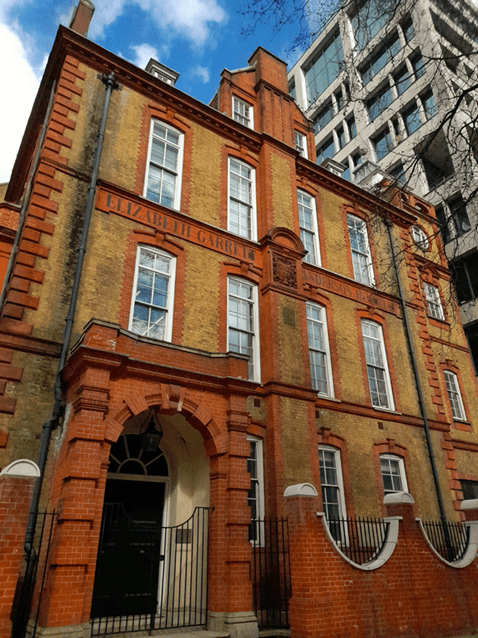
Figure 1: The Elizabeth Garrett Anderson Hospital, Euston Road. Photograph by author.
At this sight, you may ask yourself: “Who was Elizabeth Garett Anderson?”, and “Why does she have a hospital named after her?” Maybe even: “Is this building still being used?”
If your curiosity is piqued, allow it to be satisfied:
Who was Elizabeth Garrett Anderson?
Elizabeth Garrett Anderson (1836 – 1917, 81 years) was the first woman in England to gain a medical degree and practise as a doctor (Figure 2)1–4. She was inspired to pursue this career after meeting Dr Elizabeth Blackwell, the first Englishwoman to graduate with a medical degree from the United States3, 4.
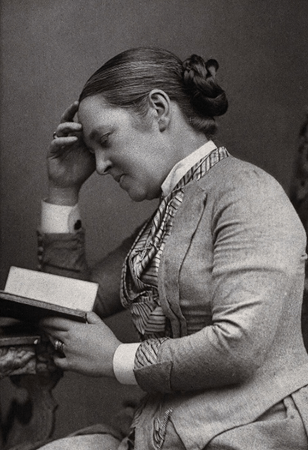
Figure 2: Elizabeth Garrett Anderson. Source: Wellcome Trust, via Wikimedia Commons.
Elizabeth first tried to enter medical schools by directly applying, but had no success on that front. This was because Victorian society at the time expected women to uphold the domestic duties of wife and mother. As a result, from 1860 to 1861 she became a nursing student at Middlesex Hospital and attempted to attend medical classes. But after being met with hostility from the male students in those classes, she was eventually prevented from continuing this plan 1.
Because women were banned from studying medicine in universities and hospitals, Elizabeth decided to continue her education privately4. Knowing that the Society of Apothecaries (an apothecary is another word for pharmacy) had no rules against women taking their exams1, Elizabeth obtained her license in 18652–4, and was the first woman to have her name added to the medical register1. When the Society realised this, they then changed its rules to ban women from taking their exam3.
Using her newly-acquired knowledge, Elizabeth established the pharmacy St Mary’s Dispensary for Women and Children in 18661, 4. By 1870, she had finally obtained her medical degree by studying in Paris (and having to learn French in the process)1, and received her first patients just one year later 4. By 1872 she established the New Hospital for Women at St Mary’s Dispensary, which was the first women’s hospital in Britain2, 3. By 1980 the hospital was moved to Euston Road4 and then renamed in her honour in 1918, one year after her passing2, 3. In 2008, the hospital’s maternity and neonatal services were absorbed into the NHS University College Hospital, at the purpose-built Elizabeth Garrett Anderson Wing 2.
Is the hospital building still being used?
Meanwhile, the hospital building at Euston Road now belongs to UNISON Greater London, a charity for people allied to public services. UNISON provides support for members with a range of issues such as financial hardship, redundancy and care for people with special needs. The building also houses a gallery dedicated to Elizabeth and her work5–7.
What else did Elizabeth do in the medical field?
Elizabeth’s work did not stop at treating patients. In 1874, she co-founded the London School of Medicine for Women1, 4 after learning that the University of Edinburgh prevented several women from graduating with medical degrees1. She was a lecturer from 1875 to 1897, and became dean of the School from 1883 to 19024.
Elizabeth’s continuous efforts to legitimize women’s healthcare and medical education had paid off; through her actions, the Medical Act 18768 was passed to allow anyone to enter the medical profession regardless of sex.3
And now we know: Elizabeth Garrett Anderson was an incredibly driven person who saw the value women in medicine, and dedicated her life to proving it. Her accomplishments are still felt to this day, through all the women in Britain studying and working in the profession now. So it makes perfect sense to have an entire building with her name on it.
Further reading:
- London Museum Elizabeth Garrett Anderson: A pioneering doctor. In: London Museum. https://www.londonmuseum.org.uk/collections/london-stories/elizabeth-garrett-anderson/. Accessed 20 Mar 2026
- Faculty of Population Health Sciences Our History. In: UCL Elizabeth Gerrett Anderson Institute for Women’s Health. https://www.ucl.ac.uk/population-health-sciences/womens-health/about-institute/our-history. Accessed 17 Mar 2026
- Science Museum Group Collection Elizabeth Garrett Anderson. In: Science Museum Group. https://collection.sciencemuseumgroup.org.uk/people/cp119599/elizabeth-garrett-anderson. Accessed 17 Mar 2026
- English Heritage GARRETT ANDERSON, Elizabeth (1836-1917). In: English Heritage. https://www.english-heritage.org.uk/visit/blue-plaques/elizabeth-garrett-anderson/. Accessed 17 Mar 2026
- UNISON Greater London UNISON Greater London. In: UNISON Greater London. https://london.unison.org.uk/about/. Accessed 20 Mar 2026
- Charity Commission for England and Wales UNISON WELFARE. In: Charity Commission for England and Wales. https://register-of-charities.charitycommission.gov.uk/en/charity-search/-/charity-details/1023552/contact-information. Accessed 20 Mar 2026
- Squire & Partners Elizabeth Garrett Anderson Gallery. In: Squire & Partners. https://squireandpartners.com/architecture/reuse/elizabeth-garrett-anderson-gallery/. Accessed 20 Mar 2026
- UK Public General Acts (1876) The Medical Act 1876.


Leave a comment